90°F · 40% humidity
91°F heat index
Humidity adds little at this combination, but prolonged exertion and direct sun still matter.
Result
103.3°F
Very highReschedule strenuous activity when possible.
The calculation
Enter shaded air temperature and relative humidity from the same place and time. In hot conditions, HeatGuard uses the National Weather Service Rothfusz regression with the standard low- and high-humidity adjustments. Cooler inputs use the NWS simple approximation.
The result represents shaded, light-wind conditions. Direct sun, hot surfaces, clothing, exertion and personal factors can add risk that the number does not describe.
Worked examples
Every example is generated by the same production function as the calculator and rounded to the nearest degree.
90°F · 40% humidity
91°F heat index
Humidity adds little at this combination, but prolonged exertion and direct sun still matter.
90°F · 70% humidity
106°F heat index
The same air temperature produces a much higher feels-like value because evaporation is less effective.
100°F · 40% humidity
109°F heat index
Lower humidity does not make extreme air temperature harmless; the calculated burden remains very high.
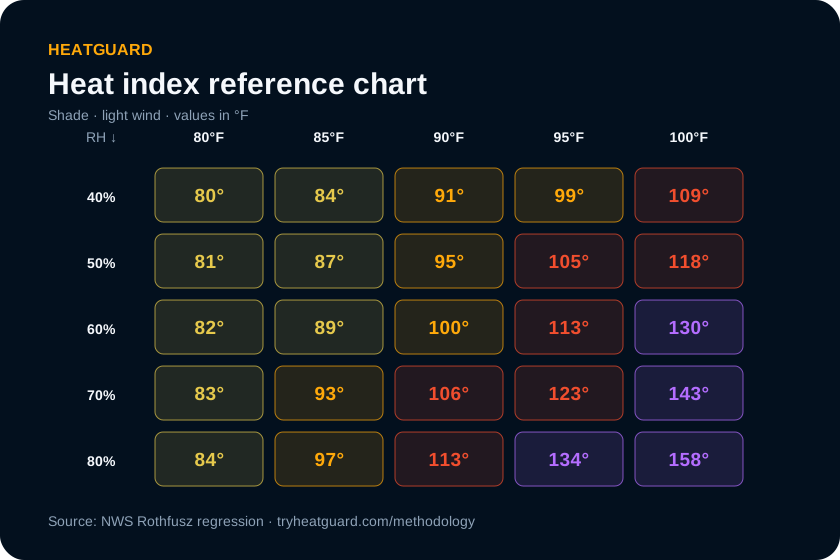
Shade · light wind
Find air temperature across the top and relative humidity down the side. Each cell shows the calculated feels-like temperature in °F.
| RH ↓ / Air → | 80°F | 85°F | 90°F | 95°F | 100°F |
|---|---|---|---|---|---|
| 40% | 80°Moderate | 84°Moderate | 91°High | 99°High | 109°Very high |
| 50% | 81°Moderate | 87°Moderate | 95°High | 105°Very high | 118°Very high |
| 60% | 82°Moderate | 89°Moderate | 100°High | 113°Very high | 130°Extreme |
| 70% | 83°Moderate | 93°High | 106°Very high | 123°Very high | 143°Extreme |
| 80% | 84°Moderate | 97°High | 113°Very high | 134°Extreme | 158°Extreme |
Calculated with the NWS Rothfusz regression and standard adjustments. Direct sun, hot surfaces, exertion and personal factors can raise real-world risk.
Embed the chart
Responsive HTML with visible source attribution
<figure style="max-width:840px;margin:1.5rem auto">
  <a href="https://tryheatguard.com/tools/heat-index-calculator?utm_source=publisher&utm_medium=embed&utm_campaign=heat_index_chart">
    <img src="https://tryheatguard.com/assets/heat-index-chart.svg" alt="Heat index chart by air temperature and relative humidity" width="840" height="560" loading="lazy" decoding="async" style="display:block;width:100%;height:auto">
  </a>
  <figcaption style="margin-top:.5rem;font:14px/1.5 system-ui,sans-serif;color:#52606d">
    Heat index reference chart by <a href="https://tryheatguard.com/tools/heat-index-calculator?utm_source=publisher&utm_medium=embed&utm_campaign=heat_index_chart">HeatGuard</a>. Based on the National Weather Service heat-index equation; values assume shaded, light-wind conditions.
  </figcaption>
</figure>
Free to embed unchanged with the visible HeatGuard attribution intact. Publishers may apply their normal link policy; no followed link is required.
Publisher use
Embed the hosted SVG or download it for an article, lesson, safety resource or presentation. Keep the chart unchanged so its assumptions and source line remain visible.
Keep the branded caption and link to the calculator so readers can inspect the method and try their own inputs. Your normal editorial link attributes are acceptable.
Use it to compare warm, humid scenarios and understand why humidity changes perceived heat. For today's conditions, use a location forecast so the inputs and timing stay current.
For exertion protocols that account for solar radiation and wind, measured WBGT may be more appropriate. Follow the protocol that governs the activity.
Calculation questions
Air temperature and relative humidity are combined using the NWS Rothfusz regression in hot conditions, with standard low- and high-humidity adjustments. Lower combinations use the NWS simple approximation.
No. The standard calculation assumes shade and light wind. Sun, hot surfaces, exertion, clothing and individual factors can add risk beyond the number.